Laced Ink Vintage Vol. 8: A Designer’s Deep Dive
There’s a specific challenge in digital design that many of us face: how to create something that feels genuinely aged without relying on cliché or low-quality textures. When you’re building a brand identity or a product line that leans into a historical or artisanal aesthetic, the background sets the entire mood. If the texture looks too synthetic, the whole project falls flat. This is precisely where the Laced Ink Vintage Vol. 8 | Collection steps in. It isn’t just a set of images; it’s a toolkit for creating immediate visual depth.
The Anatomy of the Aesthetic
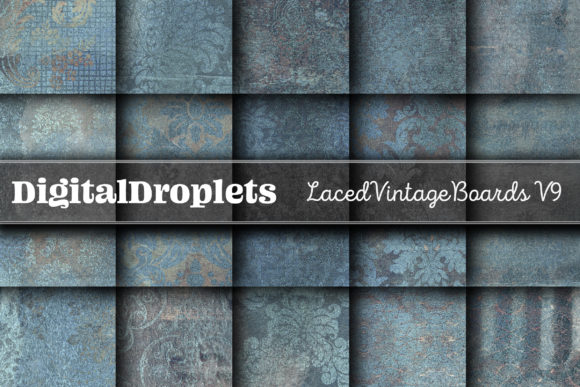
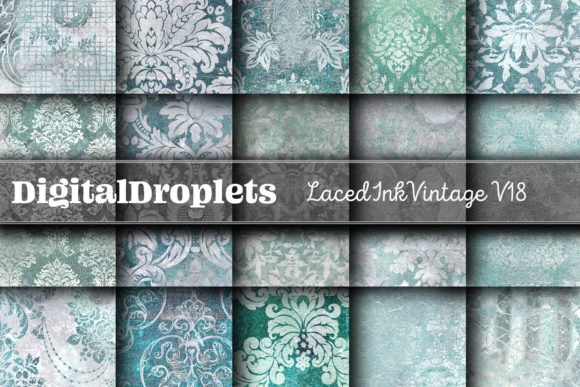
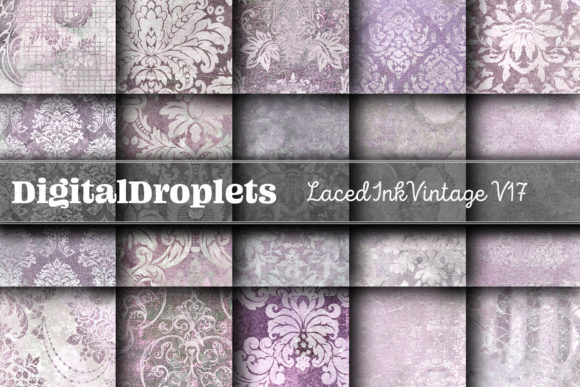
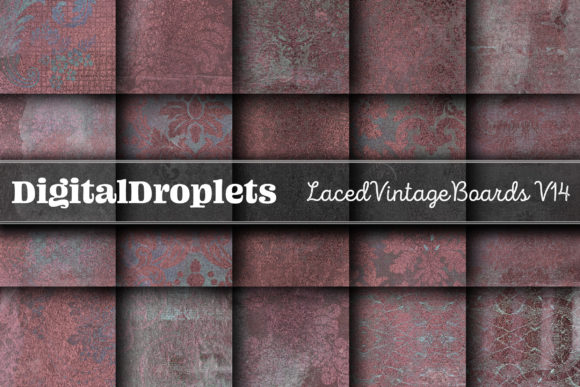
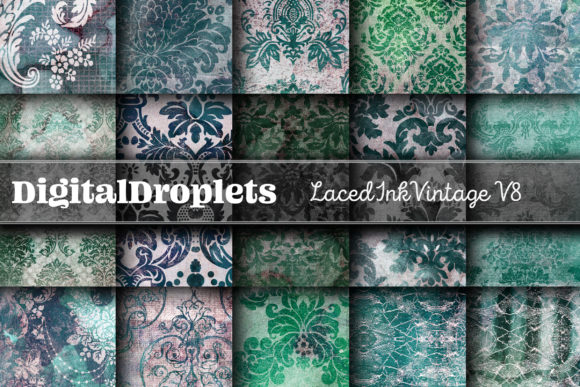
Let’s break down what makes this particular paper set stand out in a crowded market of design assets. The foundation of the Laced Ink Vintage Vol. 8 is the cardboard base. Now, cardboard in design can often look cheap, but here, it acts as a canvas. It provides that raw, tactile grain that digital work often lacks. Overlaid on this are intricate damask and lace patterns. The key here is the overlay technique. The patterns don’t sit on top like a sticker; they are blended in, suggesting a history of use or perhaps a screen-printing process gone slightly imperfect.
Then, you have the integration of alcohol ink or watercolor textures. These elements introduce color and fluidity, breaking up the rigid geometry of the lace patterns. It creates a visual tension that is quite compelling. The subtle unique border on each of the 10 included papers adds a framing element that helps define your negative space without needing additional vector lines. It’s a cohesive visual personality that balances grunge with elegance.
Practical Applications for Modern Creators
You might be looking at these vintage textures and thinking strictly about scrapbooking, but the utility of the Laced Ink Vintage Vol. 8 | Collection extends far beyond traditional crafting. As designers and content creators, we need to think about how these assets function in a commercial environment.
For the brand strategist, these textures are invaluable for specific niches. If you are working with a client in the specialty coffee, artisanal chocolate, or handmade soap industry, a background like this communicates "handmade" and "organic" instantly. It serves as a powerful backdrop for social media graphics. Imagine an Instagram quote post where the text sits over a faded, ink-stained lace pattern. It adds depth that a solid color cannot achieve.
Web designers and bloggers can utilize these for hero sections or sidebar backgrounds. However, a word of caution on web design: because these are high-resolution textures (300dpi JPEGs), you will need to optimize them for screen use to ensure fast load times. When used correctly, they can transform a sterile, flat website into an immersive experience.
For those involved in packaging design or product development, the applications are immediate. These papers work exceptionally well for:
- Junk Journals and Ephemera: Creating envelopes, tags, and inserts that look like they were found in an attic trunk.
- Card Making: Serving as the base layer for typography-heavy greeting cards.
- Digital Collages: Providing complex backgrounds that anchor mixed-media digital art.
- Photography Backdrops: Offering a textured surface for flat-lay product photography, especially for jewelry or vintage items.
Integrating Typography with Vintage Textures
One of the most common mistakes I see in editorial design and logo design is the clash between modern typography and vintage backgrounds. When you use a paper from the Laced Ink Vintage Vol. 8 | Collection, you are inviting a lot of visual noise into your composition. Therefore, your typography needs to be chosen carefully to maintain readability and visual hierarchy.
Avoid overly ornate script fonts or handwritten fonts for body copy on these backgrounds; the lace patterns will swallow the letterforms. Instead, consider pairing these textures with a clean, bold sans serif font for headlines. The contrast between the organic, distressed background and the geometric precision of a sans serif creates a striking, professional look. If you must use a serif font, choose one with high contrast and distinct thick/thin strokes that can cut through the texture.
Think about the "personality" of the typeface you pair with this collection. A premium font with a mid-century modern feel often pairs beautifully with damask patterns because they share a historical lineage, yet offer enough contrast to remain legible. Test your pairings by placing your text layer over the busiest part of the paper—if you can read it effortlessly there, it will work anywhere on the layout.
Evaluating Fit and Workflow
Before incorporating the Laced Ink Vintage Vol. 8 into your workflow, consider the scale of your project. These are 12x12 inch files at 300dpi, which is the standard for print production. If you are designing for invitations or wall art, the resolution is perfect. If you are cropping these down for small planner stickers or washi tape, you have plenty of pixel density to play with, allowing you to zoom in on specific textures without losing quality.
It is also worth noting that this set is part of a larger 20-paper collection. While these 10 papers offer a great starting point, evaluating the full range might be necessary if you are developing a large-scale brand identity system that requires variety but consistency. The "subtle unique border" mentioned in the description is a fantastic feature for creating a cohesive series of prints or cards, as it unifies the different ink textures under a single visual language.
Ultimately, the value of a creative font or a design asset lies in its versatility. The Laced Ink Vintage Vol. 8 | Collection is not just for one specific hobby; it is a robust set of design assets for anyone looking to add a touch of history and tactile realism to their digital work. Whether you are a small business owner wrapping a gift or a publisher designing a book cover, these textures provide a solid, professional foundation.